KitCo Friends & Family

Conversations to get to know each other, understand each other and enjoy more time together.

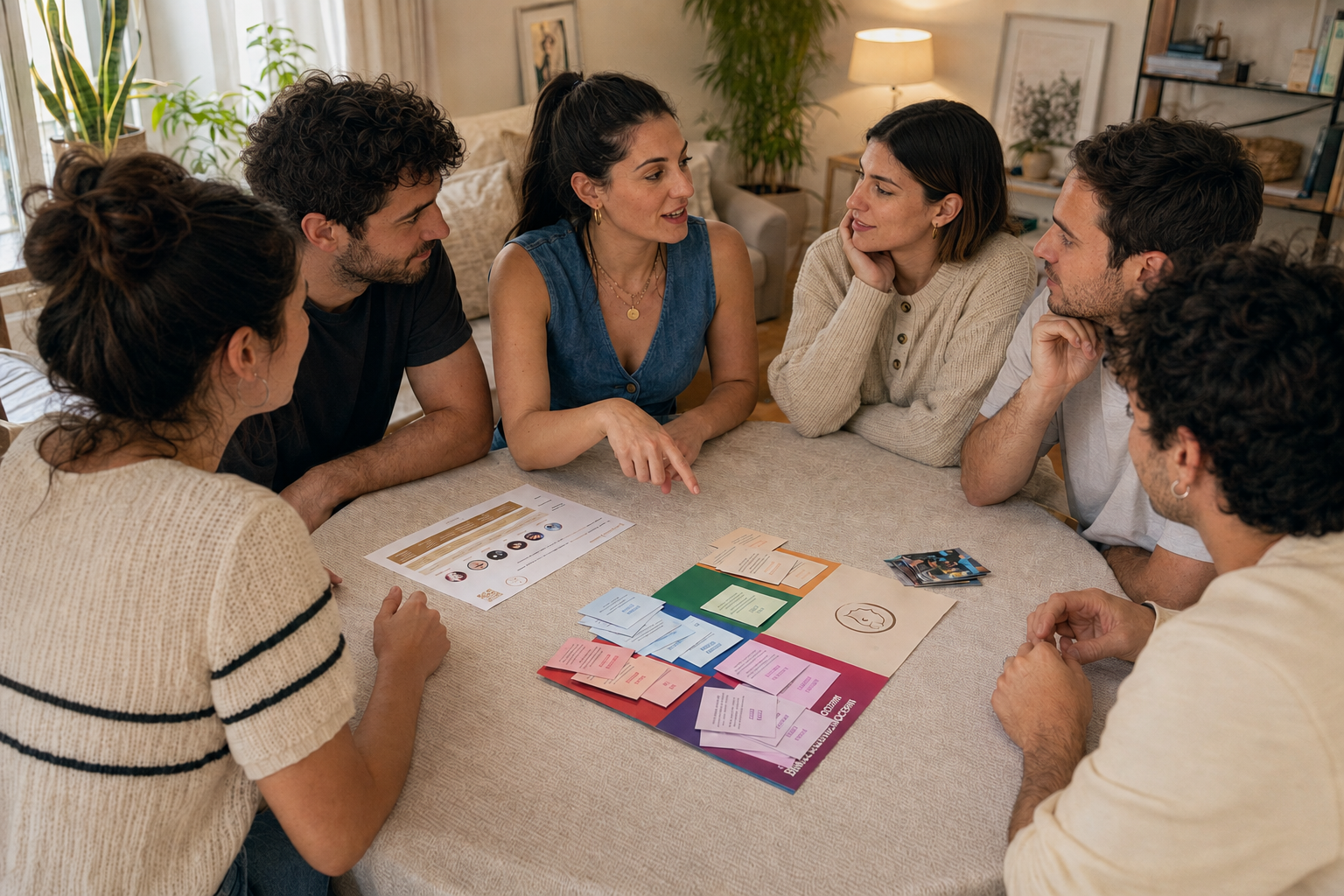
KitCo Families is a kit of games about Talents, Values and Emotions to open conversations that don't usually happen on their own, get to know each other better and enjoy quality time together.

Use it with family, as a couple, with friends, or individually. The images and questions make it easy for each person to choose, explain, and listen without looking for correct answers.

An experience of connection, self-knowledge and fun with purpose, without screens.

89,00 VAT INCLUDED

Choose the quantities per edition You can combine different editions in a single purchase.
€89 / unit
Spanish + English
Spanish + Catalan
Catalan + English

Free shipping to mainland Spain Estimated delivery in 24–72 business hours

A proven methodology, now at home

  • +500educational centers +50.000participating students
  • +200certified professionals
  • ICSMethodology mentored by the Catalan Institute of Health
  • Educational background CollaborationsDepartment of Education of the Generalitat of Catalonia · Princess of Girona Foundation Workshops and activitiesUPF · La Salle · UAB
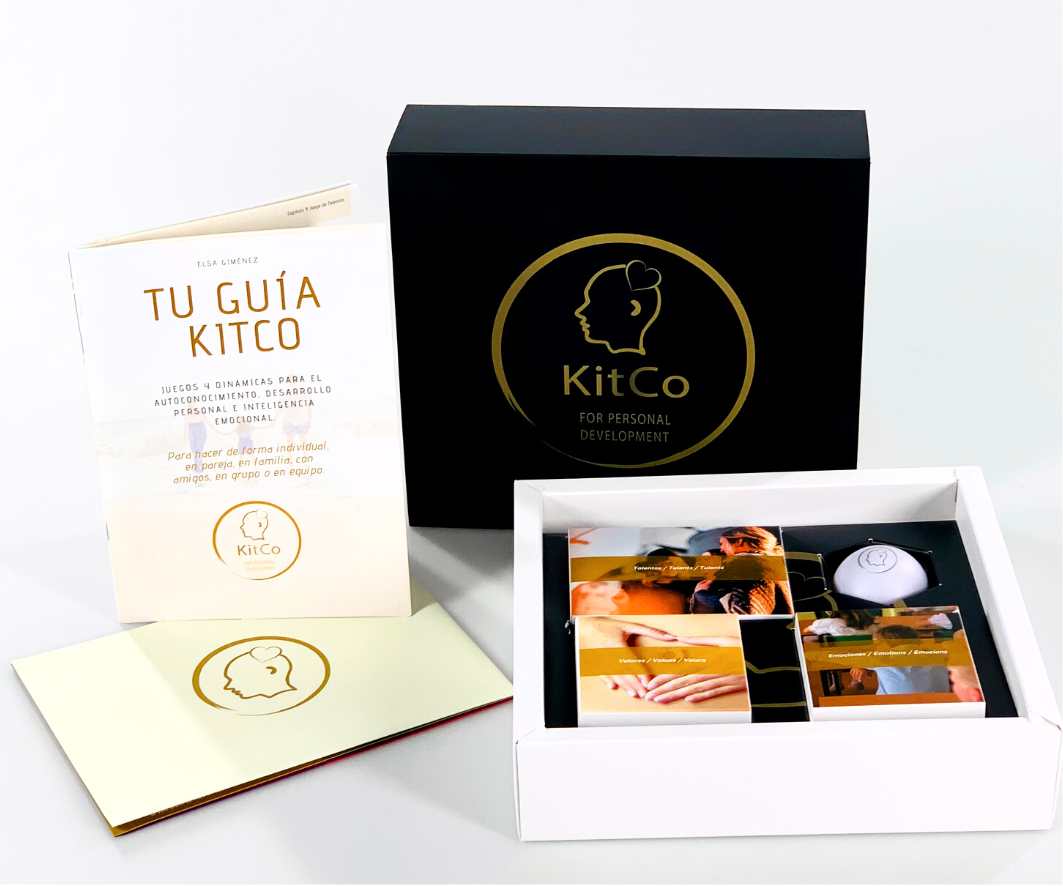
Inside the box

What's included in your KitCo.

Talents, values, and emotions complement each other. You can use a single game, combine several, or let the conversation guide you.

Caja y materiales físicos de KitCo
KitCo Friends & Family A complete kit for talking, playing and discovering.
Cartas de Talentos KitCo sobre una mesa
33 letters

Talents

Recognize strengths, ways to add value, and capabilities that we want to continue developing.

Dinámica con las cartas de Valores KitCo
56 cards

Values

Discovering what is important to each person and what we need to live together more coherently.

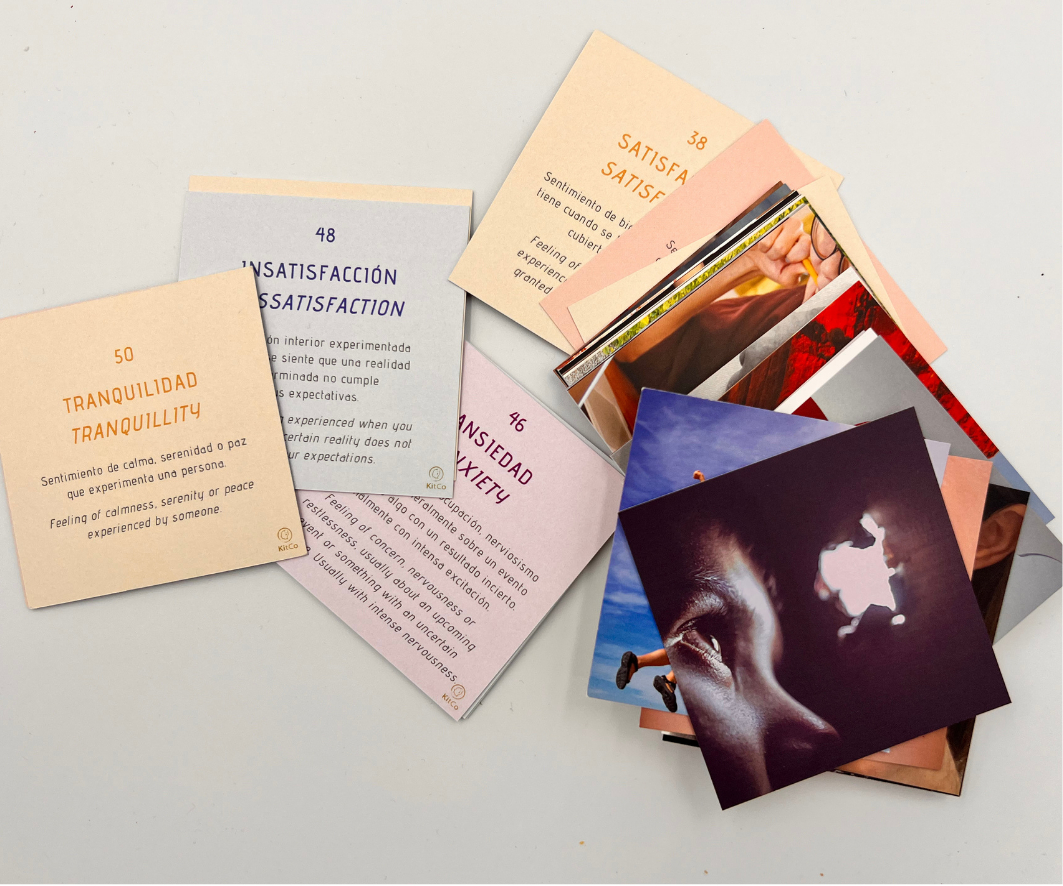
Juego de Emociones KitCo en una conversación familiar
50 cards

Emotions

Expand emotional vocabulary and better understand what we feel and what we need.

Herramientas y materiales físicos incluidos en KitCo
Letters, guide, and physical materials
Ficha de Colores de Talentos
Talent Color Chart
Ficha de Emociones Básicas
Basic Emotions Fact Sheet
Vídeos tutoriales y recursos de apoyo de KitCo
Videos and supporting digital resources
Everything is ready.

Open the box and begin.

  • Three card games: 33 Talents, 56 Values and 50 Emotions.
  • Emotional games and dynamics board: Emotional dictionary, How do I feel when…?, Emotional map and Visualization of the future.
  • Printed guide with more than 25 games and activities to share and explore on your own.
  • Basic Emotions Sheet and Talent Colors Sheet.
  • Anti-stress ball to accompany the speaking turn and game box to store the materials.
  • KitCo Digital: personal access to online activities and downloadable files.

Choose languages and buy

What is it for?

One game, many ways to enjoy it and get to know each other better.

01 · Getting to know each other

What talents do we see in each person?

Recognizing what we are good at and discovering abilities that other people see in us.

02 · Understanding each other

What is important to each person?

Sharing values and understanding why we don't always prioritize the same things.

03 · Feel

How are we doing, beyond "good" or "bad"?

Finding words to express how we feel and better understanding how others experience it.

04 · Decide

What do we want to take care of at this stage?

Prioritize and turn a reflection into a small step that we can put into practice.

05 · Living together

What do we need to feel better?

Talk about agreements, responsibilities, and ways to take care of each other.

06 · Celebrate

What do we like to share and acknowledge?

Remembering anecdotes, laughing together, and putting words to what we value in other people.

More than 25 games and activities

Who do you want to play with?

Discover some of the more than 25 suggestions in the guide, featuring cards about talents, values, and emotions. These are just some ideas to get you started; you can try many more in any context.

The images, words, and questions give you a starting point to play, remember, and share your perspective.

Family · emotions and empathy

How do I feel when…?

One person secretly chooses a situation and shows the card representing the emotion that situation makes them feel. The rest try to guess what the situation is.

Then you share how each person would feel about it and discover that the same experience can be lived in different ways.

Game · Emotion cards + situations proposed in the guide

Familia jugando con KitCo

Three video examples with emotions

See how the cards and board are used in these suggestions from the guide.

Sharing how we feel

Emotional map

Place the emotion cards on the board according to their intensity and frequency. Share your maps to understand how each person feels.

Discovering different perspectives

Guess the card

One person must guess which card was the first one placed on the table. The images chosen by the rest of the group are inspired by a person or a shared memory, such as a trip or a dinner. Afterward, each participant explains what led them to choose that image and how it relates to that person or memory.

Learn vocabulary through play

Emotional dictionary

Play games describing and guessing emotions, discover new words, and explore the purpose of each emotion.

A place for everyone

Compartiendo una experiencia con KitCo

There are many ways to be a family and share time together. Here you'll find ideas for playing with KitCo cards, adapting each suggestion to suit who's playing.

With little ones · Images and gestures

You can choose a card whose image reminds you of something happy, or act out the emotion shown on it. An adult can help read and explain the words; you can also participate by pointing, imitating, or telling what the card suggests.

You can also play… Emotional Dictionary.

Act out the basic emotions, then try to guess the emotions on other cards using pictures, gestures, and clues. Once you've guessed them, place them in their corresponding emotional family on the game board.

More games from the guide: Miming emotions · How do I feel when…? · Guess the card.

With children of different ages · Each person has something to contribute

Spread out the cards and pose a shared question: "What image reminds you of a fun family moment?" You can also choose a talent card that you recognize in someone else or a value card that represents something important to you as a family: "When have you noticed I'm good at this?" or "How can we nurture this value at home?".

Adapt the vocabulary with everyday examples that are understandable for each age group. Each person can participate with a gesture, a phrase, or a longer story.

You can also play… Miming emotions.

Secretly pick a card and act out its emotion for the other players to guess. Those who need help can prepare a scene with an adult. You can score points as a group to earn your emotions medal or choose a team format.

More games and activities from the guide: Who do these talents represent? · Our family values · How do I feel when…? · Guess the card.

With adolescents and young people · Recognize without examining

Invite them to choose the activity. You can spread out the talent cards and choose one you recognize in someone else, accompanying it with a specific example: "I saw this talent in you when…". The person who receives the card can share if they also recognize themselves in it. Adults also participate and receive recognition; anyone can pass their turn.

You can also play… How do I feel when…?

One person secretly chooses a situation from the board and shows a card that represents how they feel about it. The rest try to guess which situation they've chosen. Then you share which card each person would choose for that same situation: you might discover very different responses to something you know.

More games and activities from the guide: Guess the card · Who do these talents represent? · Our family values · Connecting.

Between generations · Stories to share

With grandparents or other relatives, choose cards whose images evoke a celebration, a hobby, or a memory. "What story does this card remind you of?" Each person can share their own and discover something from another generation. Display the cards where they're visible and share the reading if anyone prefers.

You can also play… Guess the card.

Deal at least six cards to each person, without showing them the images. The person whose turn it is asks the person to their right to turn around, choose a card, and say who in the group it inspires in them, without explaining why. The rest of the group then places a card that inspires something in them about that same person. The person who had turned around looks again and tries to guess which card the previous person placed; if they guess correctly, they win a point. Afterward, each participant explains their choice. You can also choose the images from a shared moment for the whole group, such as a trip or a dinner. Then, each participant explains what led them to choose their image of that person or memory. The game is played using the images from the emotion cards and, if you wish, also from the values cards; the written portion is not used.

More games and activities from the guide: Mimicking emotions · Who do these talents represent? · Our family's values.

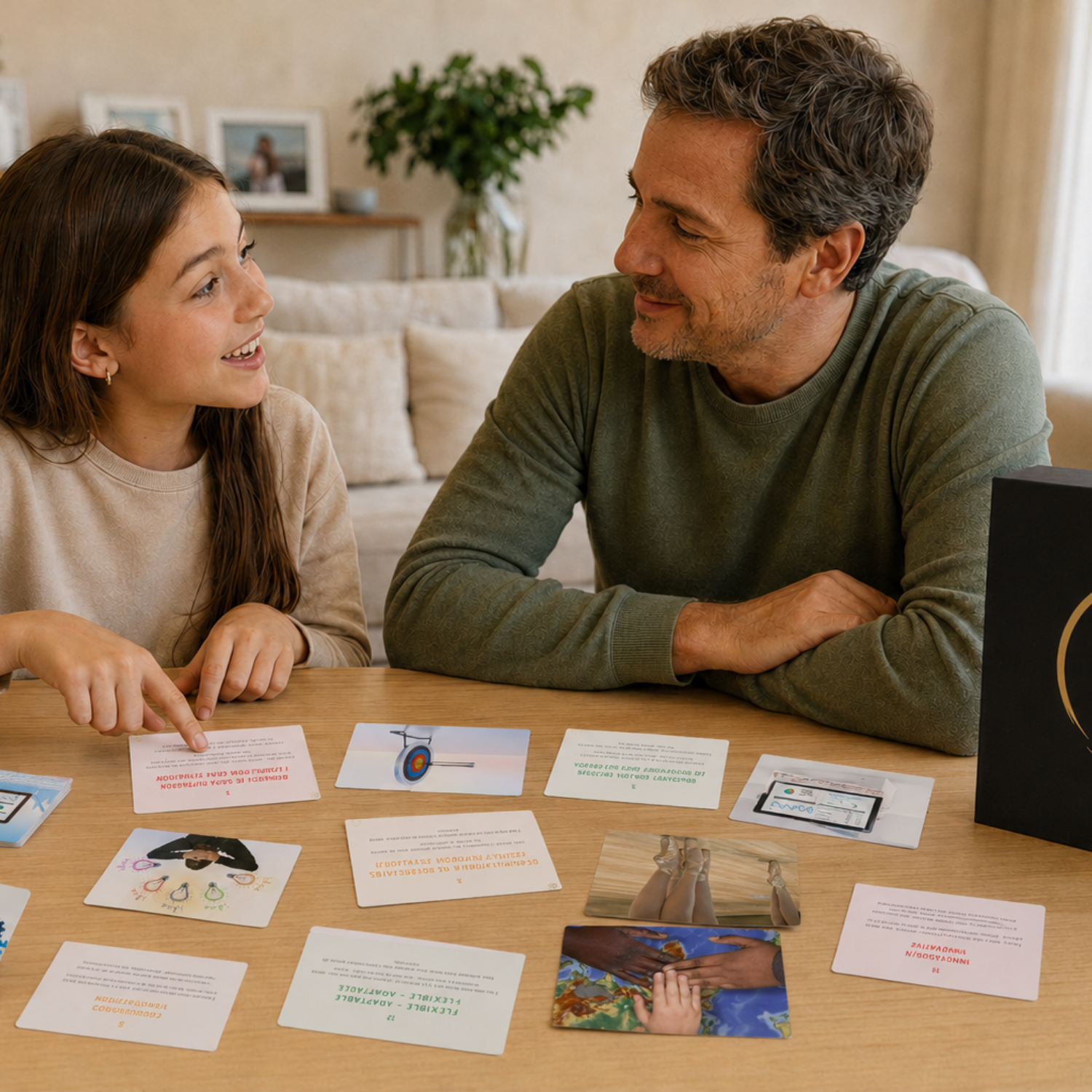
An adult and a child or young person · Also between two

Take turns choosing a card and sharing what it suggests to you: "Which image most closely resembles how you felt today?" Both people share their experience: they ask questions, listen to each other, and discover.

You can also explore… Emotional map.

Choose emotion cards that you've recently felt and take turns placing them on the map according to their intensity and frequency. You can accompany your choice with a specific moment: "I felt this emotion when…". Each person decides what they want to share; listen to how the other person experiences it without correcting their response.

To make it easier to understand, you can explain the concepts as "how much I feel it" and "how often it happens to me." This activity is recommended for children six years and older.

More games and activities from the guide: How do I feel when…? · Miming emotions · Our family values. Connecting with teenagers and young adults.

These are some ideas to get you started. The guide includes more games and activities that you can choose from depending on the age, number of participants, and your preferred time. Adapt the vocabulary, help with reading, and let each person decide what they want to share.

You are also family when there are two of you

Compartiendo una experiencia con KitCo

You can enjoy a lighthearted suggestion or engage in a more personal conversation, depending on the moment.

For enjoyment · Memories with pictures
Choose an image that reminds you of a shared anecdote and let the other person try to guess it. Then share what you each remembered.
To recognize you · A talent with a story
Each person chooses a talent they recognize in the other and describes a situation in which they have seen it. Take turns.
To discover you · The values of our relationship
First, choose your personal values, and then explore which ones you want to nurture together. You can prioritize your shared values and propose an action to give them space.
To understand you · How did we experience it?
Choose a situation and share what emotion it evokes in each of you. Listen to the differences with curiosity, without deciding for the other person how they should feel.

Each person decides what they want to share. You can simplify the question, help with the reading, and respect turns without interpreting for others.

A plan to laugh and discover ourselves

A relaxed after-dinner conversation, a regular get-together, or a group just getting to know each other. The cards let you choose how to share that time: with pictures, stories, recognition, or games.

To break the ice · A letter, a surprise
Spread the cards face up and choose one that answers a question: "Which image represents your week?" or "Which one would you take on our next trip?" Each person explains their choice and shares as much as they like.
To talk a little more · What we haven't told each other yet
Choose a card whose image suggests something you'd like to experience or a special memory. "What story is behind this image for you?" or "What would you like us to do sometime?" The same card can evoke very different stories.
To recognize talents · What I see in you
Choose a talent card that you recognize in someone else and accompany it with an example: "I saw this in you when…". The person receiving the card can then share whether they recognize themselves in it. You might discover abilities you've never even spoken aloud to yourselves.
To nurture your friendship · What matters to us
Spread out the values cards and choose which ones represent what you value most in your friendship. Ask yourselves, "How is this value evident when we're together?" or "Which one would we like to nurture more?" Share examples and suggest something you'd like to do to cultivate it.

You can also play…

Mimicry of emotions
One person secretly picks an emotion card and acts it out. The rest try to guess it. You can play in groups or teams and then share which clues helped you recognize it.
Guess the card
Deal at least six cards to each person, without showing them the images. The person whose turn it is asks the person to their right to turn around, choose a card, and say who in the group it inspires in them, without explaining why. The rest of the group then places a card that inspires something in them about that same person. The person who had turned around looks again and tries to guess which card the previous person placed; if they guess correctly, they win a point. Afterward, each participant explains their choice. You can also choose the images from a shared moment for the whole group, such as a trip or a dinner. Then, each participant explains what led them to choose their image of that person or memory. The game is played using the images from the emotion cards and, if you wish, also from the values cards; the written portion is not used.
Who do these talents represent?
One person leaves the room while the group chooses someone and selects talent cards that represent them. Upon returning, they try to guess who it is and explain why. Afterward, the group shares examples of the chosen talents.
How do I feel when…?
One person secretly chooses a situation from the board and shows a card that represents how they feel about it. The rest try to guess the situation. Afterward, you can share which card each person would choose in that same experience. There are boards with different levels of depth to choose from, depending on the group and what you'd like to share.

More suggestions from the guide: Connecting · The values of our friendship group · Emotional dictionary.

You can start with something light and then decide if you'd like to continue. Each person chooses what to share.

What if they don't feel like playing?

You might wonder if they'll accept the proposal or if they'll find it childish. You can start with a short game and a real choice about how to play. Adults can also participate: they act out scenarios, guess, and share their own answers.

How to invite them · A concrete proposal
«"Would you like to try a round with these cards? You can choose: act out emotions or guess situations. Then we'll decide if we continue." Show the cards and let them explore the options. Choose a quiet time and respect their wishes if they prefer to leave it for another day.
For a first game · Guess before you explain
You can start with "How do I feel when…?" and choose a board with situations that are familiar to them. The interesting part is discovering which situation each person has chosen based on their card, and how the same experience can be lived in different ways.
To discover how we see ourselves · Talents with examples
Spread out the talent cards and choose one that you recognize in someone else: "I saw this talent in you when…". The person receiving the recognition can share it if they identify with it. Cards are also chosen for adults.
To make you want to repeat it · Participate in your own way
Let them choose the game, read the instructions, or ask a question using the cards. You can pass the turn and decide what to talk about. Listen to their answers without correcting them, giving advice, or making comparisons.

You can also play…

How do I feel when…?
One person secretly chooses a situation from the board and shows a card that represents how they feel about it. The rest try to guess the situation. Afterward, you can share which card each person would choose in that same experience. There are boards with different levels of depth to choose from, depending on the group and what you'd like to share.
Guess the card
Deal at least six cards to each person, without showing them the images. The person whose turn it is asks the person to their right to turn around, choose a card, and say who in the group it inspires in them, without explaining why. The rest of the group then places a card that inspires something in them about that same person. The person who had turned around looks again and tries to guess which card the previous person placed; if they guess correctly, they win a point. Afterward, each participant explains their choice. You can also choose the images from a shared moment for the whole group, such as a trip or a dinner. Then, each participant explains what led them to choose their image of that person or memory. The game is played using the images from the emotion cards and, if you wish, also from the values cards; the written portion is not used.
Mimicry of emotions
One person secretly picks an emotion card and acts it out. The rest try to guess it. You can play in groups or teams and then share which clues helped you recognize it.
Who do these talents represent?
One person leaves the room while the group chooses someone and selects talent cards that represent them. Upon returning, they try to guess who it is and explain why. Afterward, the group shares examples of the chosen talents.

More suggestions from the guide: Our family values · Connecting.

One round might be enough. If you're still keen for another, you'll know where to go next.

Explore more dynamics for me

Dinámicas con KitCo
Discover my talents
Recognize your abilities, ask for examples from people around you, and choose the talents you identify with.
Discover my values
Identify what is important to you, prioritize your needs, and observe how they are present in your daily life.
Understanding my emotions
Use the emotional map to observe the intensity and frequency of what you feel and reflect on what needs your attention.
My value proposition and orientation
Put into words what you can contribute and explore activities and professional options where you can develop your talents.
Coherence and Ikigai
Connect your talents, values, interests, and the needs of your environment to explore decisions and next steps that make sense to you.

The guide includes individual exercises. You can start with the one that resonates most with your current situation and return to it whenever you need to.

Real experiences with KitCo.

Discovering talent and sharing time between generations: those who have played share their experience.

In first person

David Calle shares his experience with KitCo.

Listen to his testimony.

More experiences
The first game

«"And we also discovered many talents that we didn't know were talents."»

Mother of two children, ages 15 and 13
Understanding what matters

«"The day we played the values game with KitCo, I was able to understand her, and I saw her face when I understood her."»

Mother of a 13-year-old daughter
A Christmas with the family

«"There were 15 of us playing, 9 of whom were teenagers. We played for three and a half hours and they didn't answer their phones at any point."»

15 people, including 9 teenagers
Putting a name to emotions

«"I told him, 'You look angry,' and he said, 'No, frustrated.'"“

Mother of a 7-year-old son and a 17-year-old daughter
Playing with my grandchildren

«"We have playful conversations that I've never had with his mother, it's so sweet."»

77-year-old grandmother
A moment to understand myself

«"I understood myself and knew what I had to do."»

43-year-old man
Recognizing each other at home

«"I will never forget that moment when my 12-year-old son told me about the talents he saw in me, and I told him about them."»

Counselor and mother of two children aged 10 and 12
A getaway with friends

«"We laughed, we said things we had never said before, and we got emotional."»

Friendship group aged 37 to 43

KitCo Digital, included with your game.

Your personal access includes online activities to get to know you better and downloadable files to continue using KitCo at your own pace.

Your online dynamics

01 · Talents 360°
Vista de la dinámica de talentos en KitCo Digital

Your gaze and that of those who know you.

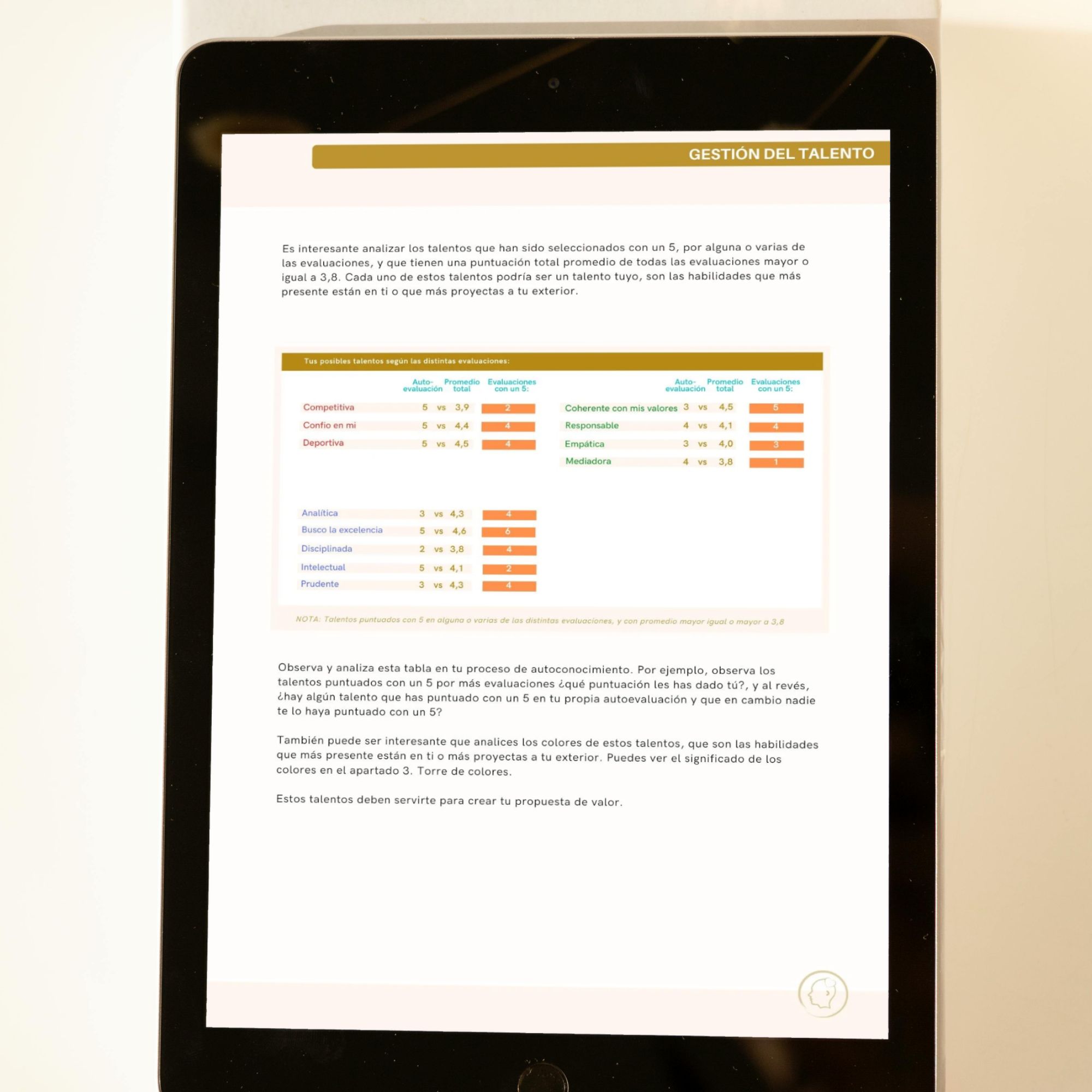
Combine your self-assessment with feedback from your family, friends, work, or sports team. Compare the different environments, choose your top six talents, and receive your talent report.

02 · Personal values
Vista de la dinámica de valores personales en KitCo Digital

Discover what's important to you.

Identify your personal values and prioritize what you want to take care of in your life.

03 · Consistency with your essence
Vista de la dinámica de coherencia con tu esencia

From your day-to-day life to your action plan.

List your activities related to family, work, personal time, and other areas of life. Indicate how much time you dedicate to each, which of your six talents you can develop, and what values are present. Rate your satisfaction from 1 to 10: the charts help you identify changes and create an action plan to feel more satisfied.

A report to revisit your discoveries.

The talent report includes your self-assessment, the evaluations and comments from your environment, the comparisons between environments, and your final selection of six talents.

This sample illustrates the format. Each report reflects the process of its own user.

KitCoYour resource space
Your downloadable files
Primera página real: Tu guía KitCoYour KitCo guide
Primera página real: Talentos y profesionesTalents and professions
Primera página real: Emociones básicasBasic emotions
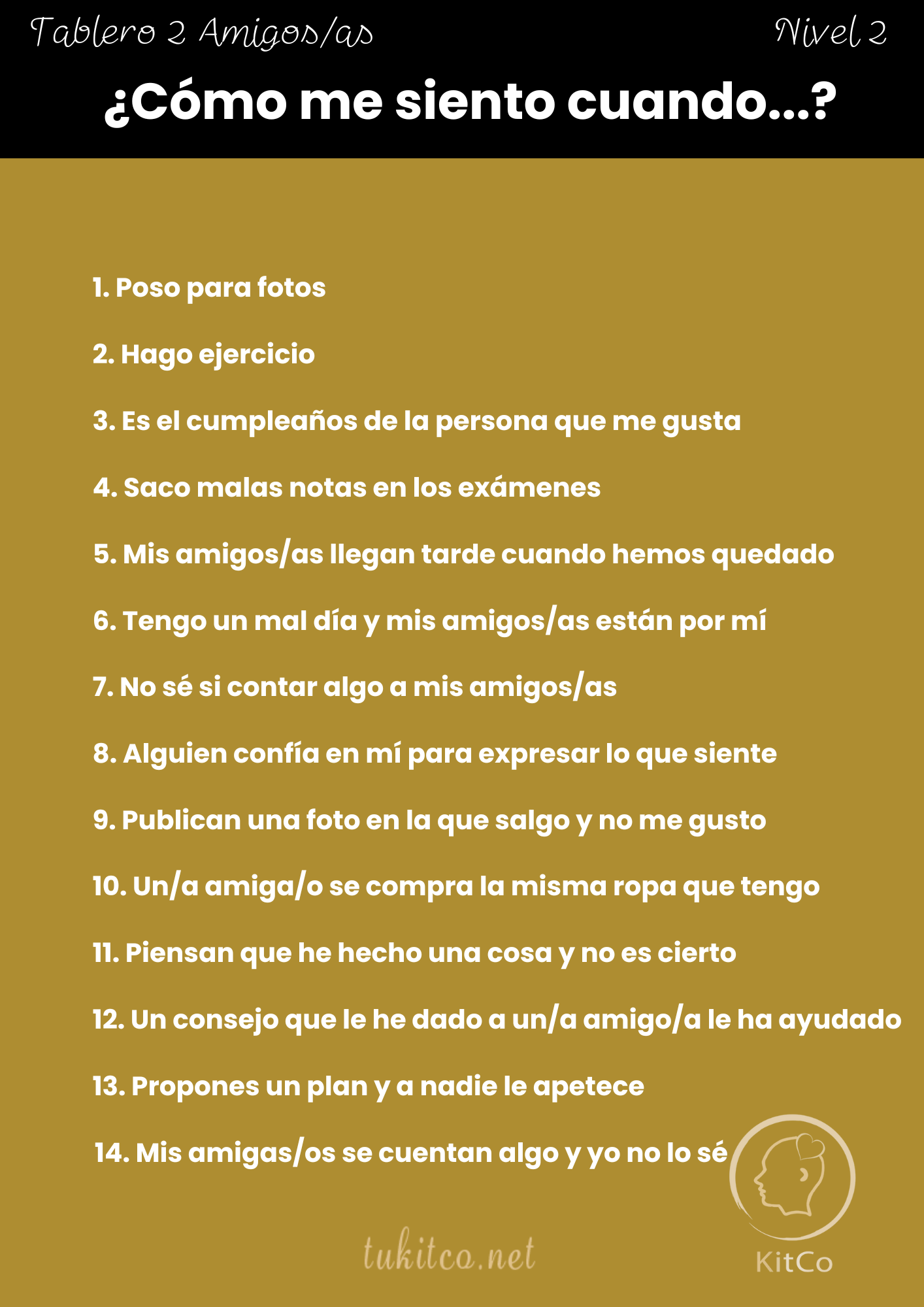
Tablero 2 Amigos/as, nivel 2: ¿Cómo me siento cuando…?How do I feel when…?
Ficha KitCo: Mis talentosMy talents
Ficha KitCo: Mis valoresMy values
An illustrative view of your downloadable resources.
Downloadable files included

More resources to continue discovering together.

Find "How do I feel when…?" boards adapted to different ages and levels of depth, cards to explore your talents and values, and the guide to keep trying games together.

Download them and print them when you need them.

Before choosing

The usual doubts.

KitCo adapts to the moment and to the people. No prior experience is necessary to get started.

KitCo Friends & Family

The next important conversation can begin with a letter.

Cards of Talents, Values and Emotions, more than 25 games and activities, guide, board and KitCo Digital included. Choose your edition and start discovering it.

Choose edition and buy
Esta web utiliza cookies propias y de terceros para su correcto funcionamiento y para fines analíticos. Contiene enlaces a sitios web de terceros con políticas de privacidad ajenas que podrás aceptar o no cuando accedas a ellos. Al hacer clic en el botón Aceptar, acepta el uso de estas tecnologías y el procesamiento de tus datos para estos propósitos.
Privacidad